

More public sector routes: see Garda recruitment and Dublin City Council jobs.
Jobs in Dublin provide fantastic employment prospects for both local and foreign job seekers in a wide range of industries. Dublin is Ireland’s economic and corporate powerhouse, with prominent enterprises in technology, finance, healthcare, customer service, education, and other industries. Whether you’re seeking full-time, part-time, remote, graduate, or visa sponsorship possibilities, Dublin has a large job market with room for advancement. This guide covers the industries hiring in Dublin, how to search effectively, the skills employers want, and in-demand industries, what international applicants need to know.
Last updated: 10 November 2026 | Checked against the CSO (Labour Force Survey Q2 2026 and Earnings Analysis 2025), DETE employment permit statistics 2025, the RTB Rent Index Q1 2026 and the HSE jobs site.
Quick answer
- Jobs and competition: 851,600 people were employed in Dublin in Q2 2026 and the unemployment rate was 5.7%, against 5.1% nationally (CSO).
- Pay: median weekly earnings among Dublin residents were €848.06 in 2025, 11.7% above the State median of €759.21 (CSO).
- Work permits: DETE issued 14,627 of Ireland’s 31,044 employment permits in 2025 for Dublin, about 47% of the total.
- Rent: the average new tenancy in County Dublin was €2,335 a month in Q1 2026 (RTB).
- Foreign applicants: most non-EEA nationals need an employment permit. A General Employment Permit generally needs at least €36,605 a year.
Live Jobs in Dublin
These Dublin vacancies were open when we checked. We list a job only after reading it on the employer’s own vacancy page. Most are HSE or HSE-funded posts that need NMBI or Medical Council registration, so read each specification for the contract, pay and requirements before you apply.
9 open vacancies · checked on 24 November 2026. Closed jobs are removed automatically.
Nurses (NMBI registration needed)
- Staff Nurse, Intellectual Disability, HSE Dublin and South East, Co. Tipperary (HSE). Permanent whole-time; specified purpose part-time; open to all applicants; closes 4 December 2026, 12:00 Irish time. Regional panel across Dublin South & Wicklow, Carlow/Kilkenny/South Tipperary and Waterford/Wexford; current permanent vacancies in Co. Tipperary. Intellectual disability nursing experience required. View the vacancy.
- Staff Nurse, Mental Health (Dual Diagnosis, Addiction Services), St Mary's Hospital, Phoenix Park, Dublin (HSE). Permanent, whole-time; open to all applicants; closes 7 December 2026, 12:00 Irish time. Keltoi Dual Diagnosis Day Service View the vacancy.
- Clinical Nurse Manager 2, Dual Diagnosis Addiction Services, St Mary's Hospital, Phoenix Park, Dublin (HSE). Permanent, whole-time; open to all applicants; closes 7 December 2026, 12:00 Irish time. Keltoi Dual Diagnosis Day Service. Grade: Clinical Nurse Manager 2 (Mental Health). View the vacancy.
- Staff Nurse, Surgical Hub, Surgical Hub, Dublin North (HSE). Permanent, whole-time (rolling campaign); open to all applicants; closes 8 January 2027, 17:00 Irish time. Recruiter: HSE Dublin and North East View the vacancy.
Hospital consultant posts (HSE consultant scale: about €238,000 to €286,000)
- Consultant Anaesthesiologist, Tallaght University Hospital, Dublin. Permanent, whole-time; open to all applicants; closes 4 December 2026, 00:00 Irish time. Advertised by the HSE on behalf of Tallaght University Hospital (not an HSE job). View the vacancy.
- Consultant Clinical Neurophysiologist, Beaumont Hospital, Dublin. Permanent, whole-time; open to all applicants; closes 4 December 2026, 12:00 Irish time. Advertised by the HSE on behalf of Beaumont Hospital (not an HSE job). Flexible working requests considered. View the vacancy.
- Consultant General Surgeon (Upper GI), Tallaght University Hospital, Dublin (advertised via the HSE). Permanent, whole-time; open to all applicants; closes 11 December 2026, 00:00 Irish time. Reference M26093. View the vacancy.
- Consultant Cardiologist and General Physician, Beaumont Hospital, Dublin (HSE). Permanent, whole-time; open to all applicants; closes 11 December 2026, 12:00 Irish time. View the vacancy.
- Consultant Neuropathologist, Beaumont Hospital, Dublin (HSE). Permanent, whole-time; open to all applicants; closes 14 December 2026, 12:00 Irish time. Reference BTNPNP12. View the vacancy.
For more vacancies, search the HSE jobs page and the careers pages of the employers you want to work for. If you need a work permit, read our guide to jobs in Ireland with visa sponsorship first.
Why Work in Dublin?
Dublin is Ireland’s largest labour market. According to the CSO Labour Force Survey, 851,600 people were employed in Dublin in Q2 2026 — about 30% of everyone in employment in Ireland — up from 842,400 a year earlier. Dublin’s unemployment rate was 5.7% in Q2 2026, above the national rate of 5.1%, so competition for jobs is real. The city provides opportunities in technology, finance, healthcare, construction, education, retail, and hospitality, and many international companies run their European operations from Dublin.
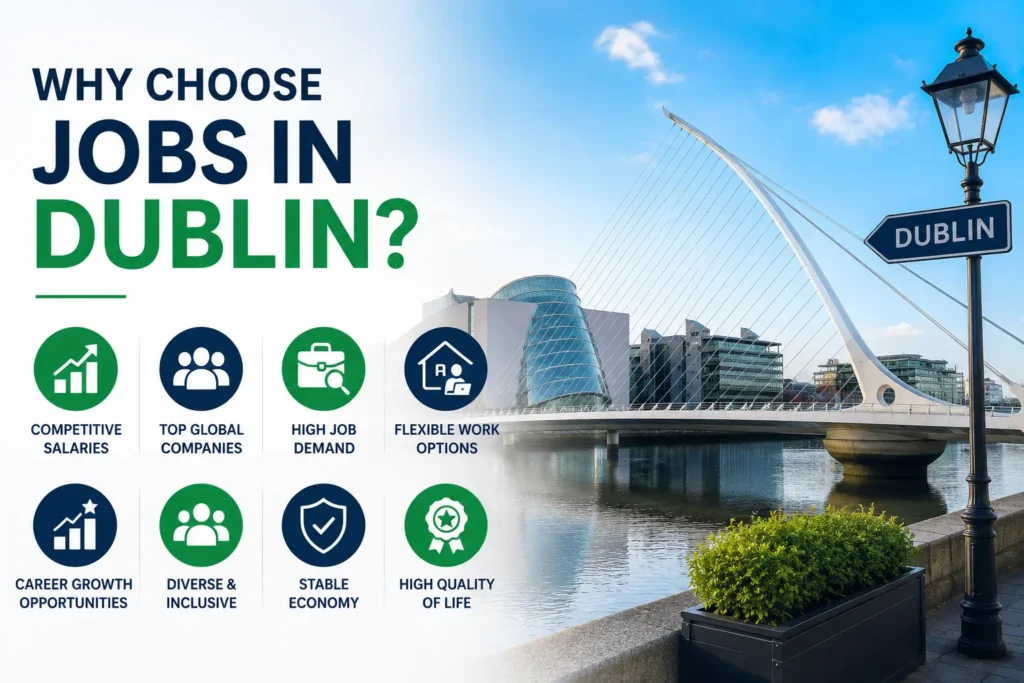
Some of the key benefits of working in Dublin include:
- Competitive salaries and employee benefits
- Opportunities with leading international companies
- Jobs at many levels, although many entry-level roles cannot be sponsored with an employment permit
- Availability of full-time, part-time, and remote positions
- Career growth and professional development opportunities
- A diverse and multicultural work environment
- Access to Ireland’s high standard of living
Whether you are starting your career, changing industries, or seeking international work experience, Dublin provides a wide range of employment opportunities across various sectors.
Popular Industries Hiring in Dublin
Dublin offers jobs in a variety of industries, making it an appealing destination for professionals of various skill and experience levels. Employers are actively recruiting competent individuals to fill a variety of roles, including those at global technology businesses, healthcare providers, and financial institutions.
In Q2 2026 the largest employment sectors in Dublin were health and social work (120,500 people), information and communication (101,200), wholesale and retail (79,100), professional, scientific and technical activities (76,500), finance, insurance and real estate (74,600) and education (70,700), according to the CSO. Key industries include:
Technology and IT
Dublin is a major technology hub in Europe, with more than half of Ireland’s information and communication employment (101,200 of 177,400 people in Q2 2026, CSO), offering opportunities for software developers, data analysts, cybersecurity specialists, cloud engineers, and IT support professionals.
Finance and Banking
The financial sector continues to create jobs for accountants, financial analysts, auditors, compliance officers, and banking professionals.
Healthcare
Hospitals, clinics, and healthcare organizations regularly recruit doctors, nurses, caregivers, pharmacists, and healthcare assistants.
Construction and Engineering
Infrastructure development and commercial projects generate demand for engineers, project managers, architects, surveyors, and skilled tradespeople.
Customer Service and Sales
Many companies hire customer support representatives, call center agents, sales executives, and account managers to support their growing operations. Call and contact centre roles are on the Ineligible Occupations List for employment permits, apart from some roles needing a non-EEA language that are supported by IDA Ireland or Enterprise Ireland.
Hospitality and Retail
Hotels, restaurants, and retail businesses frequently offer opportunities for managers, supervisors, customer service staff, and entry-level workers. Most waiting, bar, kitchen-assistant, cleaning and retail assistant roles are on the Ineligible Occupations List, so they are realistic mainly for people who already have the right to work.
By exploring these industries, job seekers can identify the sectors that best match their qualifications, experience, and long-term career goals.

Pay in Dublin
The CSO publishes earnings by county in its Earnings Analysis using Administrative Data Sources 2025. Dublin had the highest median weekly earnings of any county: €848.06, up 3.2% on 2024 and 11.7% above the State median of €759.21. Mean weekly earnings in Dublin were €1,149.74. The figures are based on where employees live, not where they work, and they include part-time work.
| CSO, 2025 | Median weekly | Mean weekly |
|---|---|---|
| Dublin | €848.06 | €1,149.74 |
| Cork | €795.81 | €999.47 |
| State | €759.21 | €974.08 |
For pay by sector and by role, see our guides to the average salary in Ireland and the highest-paying jobs in Ireland. The legal pay floor is in our minimum wage guide, and our salary calculator shows take-home pay.
Work Permits for Dublin Jobs
DETE publishes employment permits by county. In 2025 it issued 31,044 permits in total, and 14,627 of them (47.1%) were for Dublin. Cork was next with 2,973, then Limerick with 1,543. For non-EEA workers, Dublin is where most permit-backed jobs are.
DETE’s list of employers does not show the county of each job, so we cannot rank Dublin employers on its own. The five employers that received the most permits nationally in 2025 were Google Ireland (368), Ernst & Young (278), University Limerick Hospitals Group (251), Amazon Development Centre Ireland (245) and Redwood Extended Care Facility (237). The full list of 50 is in our guide to companies that receive employment permits. A company on that list is not necessarily hiring now, so always check its own vacancies.
Permit rules and salary thresholds are in our guides to the General Employment Permit and the Critical Skills Employment Permit.
Rent and Travel Costs in Dublin
The RTB Rent Index puts the average new tenancy in County Dublin at €2,335 a month in Q1 2026, and €2,301 in Dublin City. See our guide to rent in Dublin for rents by council area and the rules every renter should know. For public transport, our cost of living in Ireland guide gives a typical Leap Card spend of €80 to €120 a month for a city commuter (Transport for Ireland).
Thinking of another city? Our guides to jobs in Cork, jobs in Galway, jobs in Limerick and jobs in Waterford compare pay, rent and permits.
How to Find a Job in Dublin
Your search becomes easier when you use the right tactics and continuously apply to relevant openings. Employers frequently search for individuals with a well-organised CV, appropriate abilities, and a professional internet presence. Want festive work? Read our Christmas jobs in Ireland guide for pay and rights.
Follow these tips to improve your chances of securing employment in Dublin:
Create a Professional CV
Ensure your CV is up to date and highlights your education, work experience, certifications, and key skills relevant to the position.
Apply to Relevant Job Openings
Focus on vacancies that match your qualifications and career goals rather than submitting generic applications to every available position.
Customize Your Applications
Tailor your CV and cover letter for each job to demonstrate how your experience aligns with the employer’s requirements.
Build Your Professional Network
Networking can help you discover opportunities that may not be publicly advertised. Connect with professionals and recruiters in your industry.
Improve Your Skills
Employers value candidates who continuously develop their skills. Consider gaining certifications or training related to your field.
Prepare for Interviews
Research the company, practice common interview questions, and be ready to discuss your experience and achievements confidently.
By following these steps, job seekers can increase their visibility to employers and improve their chances of finding suitable roles that align with their career aspirations.
Types of Jobs in Dublin
Dublin has openings in a wide range of areas, allowing job seekers to find opportunities that fit their skills, experience, and career aspirations. Whether you are a fresh graduate, an established professional, or someone searching for flexible working arrangements, there are several openings throughout the city.
Full-Time Jobs in Dublin
Full-time positions are ideal for candidates seeking long-term career growth, stable income, and comprehensive employee benefits. These roles are commonly available in technology, finance, healthcare, and construction.
Part-Time Jobs in Dublin
Part-time opportunities are suitable for students, parents, and individuals seeking flexible working hours. Retail, hospitality, customer service, and administrative roles frequently offer part-time positions.
What part-time workers should know:
- The minimum wage is €14.15 an hour for workers aged 20 and over in 2026, with lower youth rates below that age. Budget 2027 announced €14.94 from 1 January 2027, which needs legislation. See the minimum wage guide.
- For public holidays, part-time workers need to have worked at least 40 hours in the previous 5 weeks to get the benefit. See bank holidays in Ireland.
- Annual leave builds up with the hours you work, so part-time workers get it too. See annual leave in Ireland.
- Statutory sick pay applies to part-time employees after 13 weeks of service with the employer. See sick leave in Ireland.
- Students on a Stamp 2 permission can work up to 20 hours a week during term and 40 hours a week in the holiday periods (June to September and 15 December to 15 January), according to the Irish Immigration Service. Stamp 2 holders must not engage in any other business or trade.
Remote Jobs in Dublin
Many employers now provide remote and hybrid work options, enabling professionals to work from home while maintaining a healthy work-life balance. See our guide to remote jobs in Ireland, including what employment permit holders need to check.
Graduate Jobs in Dublin
Recent graduates can find entry-level opportunities, internships, and trainee programs designed to help them gain practical experience and build successful careers.
Jobs in Dublin for International Applicants
Dublin attracts talent from around the world, and many employers actively recruit international candidates with specialized skills and experience. Unless you are an EEA, UK or Swiss citizen or already hold a permission that lets you work (such as Stamp 4 or Stamp 1G), you will need an employment permit. A General Employment Permit generally requires a salary of at least €36,605 and cannot be issued for occupations on the Ineligible Occupations List; see our guides to the General Employment Permit and Critical Skills Employment Permit.
Temporary and Contract Jobs in Dublin
Contract and temporary positions offer flexibility and can help professionals gain valuable industry experience while exploring different career paths.
Search job boards and employer career pages in your preferred category and apply to roles that match your skills, qualifications, and professional objectives.
Many Dublin jobs are in the public sector, including the civil service and State bodies. Our guide to public and civil service jobs in Ireland explains who can apply, the starting pay by grade and how to use publicjobs.ie.
Top Skills Dublin Employers Look For
Employers in Dublin look for applicants with a combination of technical expertise, industry understanding, and good interpersonal skills. Developing these in-demand talents will help you get more interviews and advance your career.
Communication Skills
Effective verbal and written communication is essential in almost every industry. Employers value professionals who can collaborate with colleagues, interact with clients, and convey information clearly.
Digital and Technical Skills
As Dublin continues to grow as a technology and business hub, skills related to software development, data analysis, cybersecurity, digital marketing, and cloud computing remain in high demand.
Problem-Solving Abilities
Companies prefer candidates who can analyze challenges, identify solutions, and make informed decisions in fast-paced work environments.
Teamwork and Collaboration
The ability to work effectively with diverse teams is highly valued by employers across sectors such as healthcare, finance, technology, and customer service.
Adaptability and Flexibility
Modern workplaces evolve rapidly, making adaptability an important trait for professionals seeking long-term career success.
Leadership and Management
Candidates with leadership experience, project management skills, and the ability to motivate teams often have access to higher-level career opportunities.
Time Management
Employers appreciate individuals who can prioritize tasks, meet deadlines, and maintain productivity while managing multiple responsibilities.
By continuously improving these skills, job seekers can become more competitive candidates and increase their chances of securing a rewarding role.
Before you move, check what a home will cost. Our Dublin rent guide shows the official average rents by council area and the rules every renter should know.
More guides:
- Warehouse and Security Jobs in Dublin
- Dublin Airport Jobs 2027
- Jobs in Drogheda
- Part-Time Jobs in Dublin 2026
Apply for Jobs in Dublin Today
Dublin’s job market spans multiple industries, with opportunities at every career level. Whether you want full-time employment, part-time work, remote or hybrid roles, graduate programmes, or a role that sponsors international candidates, the city has a diverse and dynamic job market.
Start with the major job boards (IrishJobs.ie, Indeed Ireland, Jobs.ie and LinkedIn), recruitment agencies in your field, and the careers pages of employers you want to work for. Read each job description carefully, tailor your CV, and apply to roles that match your skills and goals.
If you need a work permit, read our guide to jobs in Ireland with visa sponsorship before you apply, so you target roles and salaries that qualify.
Sources: Dublin employment and unemployment figures from the CSO Labour Force Survey Q2 2026 (tables QLF07 and QLF08, published 20 August 2026). Permit rules from DETE: General Employment Permit, Ineligible Occupations List and Critical Skills Occupations List. Checked 13 October 2026. Updated 10 November 2026 with CSO Earnings Analysis 2025 (county tables), DETE permits by county 2025 and the RTB Rent Index Q1 2026.
The largest employment sectors in Dublin are health and social work, information and communication, retail, professional and technical services, finance and education (CSO, Q2 2026). For occupations officially recognised as in short supply, check DETE’s Critical Skills Occupations List.
Yes. EEA, UK and Swiss citizens can work without a permit; most other nationals need an employment permit or an immigration permission that allows work. Employers can support a permit only for eligible roles that meet the salary threshold, generally at least €36,605 for a General Employment Permit.
CSO figures for 2025 put median weekly earnings among Dublin residents at €848.06 (mean €1,149.74), 11.7% above the State median of €759.21. Pay varies by industry, role and experience, and information and communication pays most by sector. These figures include part-time work.
Yes, many companies offer remote and hybrid working arrangements, especially in technology, marketing, customer support, and administrative roles.
You can find the latest jobs in Dublin on job boards, company career pages, recruitment agencies, and employment websites that regularly update new vacancies.
Dublin had 851,600 people in employment and an unemployment rate of 5.7% in Q2 2026, against 5.1% nationally (CSO), so competition is real. Applying to roles that match your qualifications and registration usually works better than sending generic applications.
DETE issued 14,627 of Ireland's 31,044 employment permits in 2025 for Dublin, about 47% of the total. Cork was next with 2,973.
Students on a Stamp 2 permission can work up to 20 hours a week during term and 40 hours a week in the holiday periods, according to the Irish Immigration Service. They must not engage in any other business or trade.
Get Ireland job alerts by email
Ireland’s permit rules and salary thresholds changed twice in the last eighteen months. Subscribe and we will email you when they change again, plus new job alerts and guides.
Get an email when Ireland's permit rules change
Salary thresholds, occupation lists and visa rules change every year. Subscribe and we will tell you when they do, plus new job guides. Free, no spam.
Subscribe free