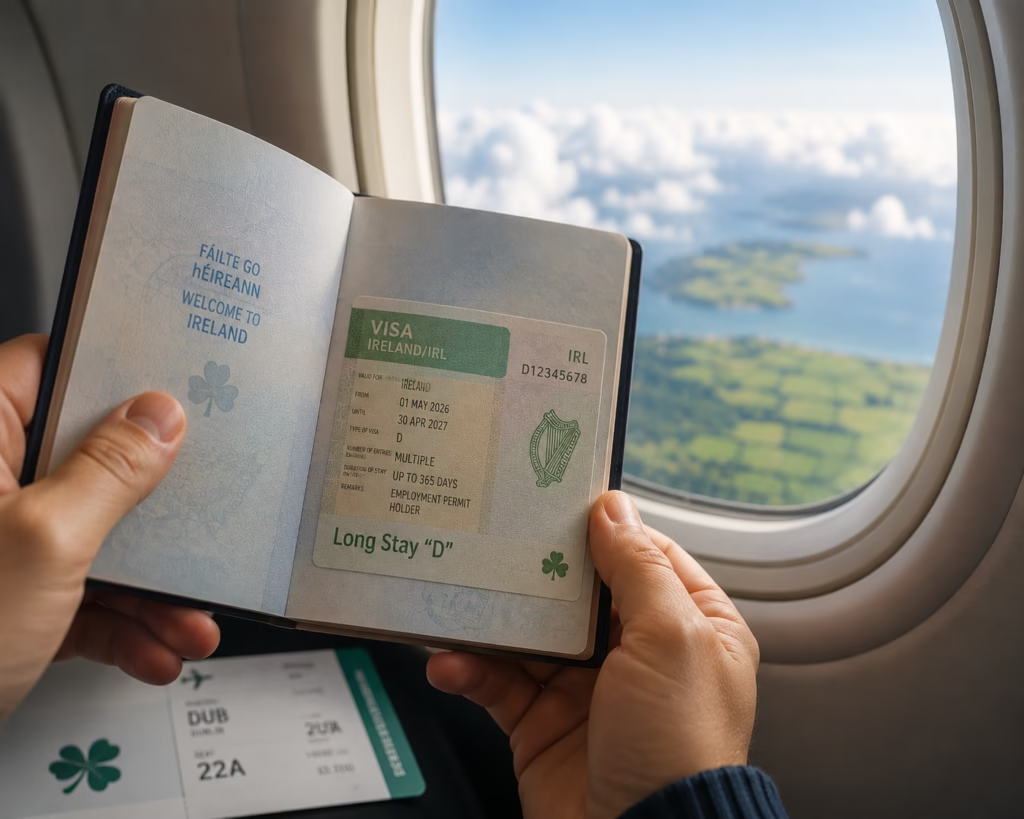

You have the job offer. Maybe you even have the employment permit. Now comes the final gate between you and your first day of work in Ireland: the visa.
For citizens of visa-required countries – including Pakistan, India, Nigeria, Bangladesh, the Philippines, and China – an approved employment permit is not enough. You also need an Ireland Long Stay D Employment Visa stamped into your passport before you board the plane.
This guide covers every Ireland work visa requirement in force in 2026. What documents you need. How the AVATS application works. What it costs. How long it takes. What immigration officers check at Dublin Airport. And what to do in the crucial first 90 days after arrival.
Everything here has been verified against Immigration Service Delivery (ISD), the Department of Enterprise, Tourism and Employment (DETE), and Citizens Information.
⚠️ Disclaimer: This article is general information, not legal advice. Irish visa and immigration rules change regularly – salary thresholds, document checklists, and processing arrangements were all updated between 2024 and 2026. Always verify the latest requirements on irishimmigration.ie and enterprise.gov.ie before applying. For complex cases, consult a registered immigration solicitor.
Quick Answer
What are the Ireland work visa requirements in 2026? You need an approved employment permit from DETE, a passport valid for at least 6 months after arrival, the ISD document checklist (job contract, finances, photos, insurance), and a Long Stay D Employment Visa applied for online via AVATS. The visa costs €60 (single entry) or €100 (multi entry).
Key Facts Table (2026)
| Item | Details |
|---|---|
| Visa name | Long Stay ‘D’ Visa – Employment |
| Issuing authority | Immigration Service Delivery (ISD), Department of Justice |
| Apply via | AVATS online portal |
| Prerequisite | Approved employment permit from DETE |
| Earliest application | 3 months before travel date |
| Fee | €60 single entry / €100 multi entry |
| Typical processing | 4–8 weeks (varies by visa office and season) |
| Passport validity | At least 6 months beyond arrival, with blank pages |
| Biometrics | Required for many nationalities (via VFS/visa centres) |
| After arrival | Register for an Irish Residence Permit before your landing permission ends (€300) |
| Immigration stamp | Stamp 1 (work with your permit employer) |
| Appeal if refused | Free, within 2 months of the refusal letter |
What Is an Ireland Work Visa?
The Ireland work visa is officially called the Long Stay ‘D’ Visa (Employment). It is an entry visa – a sticker placed in your passport that permits you to travel to an Irish port of entry to take up employment.
That definition matters, because the visa itself does three limited things:
- It lets you board transport to Ireland (airlines check it at check-in)
- It lets you present yourself to an immigration officer at the border
- It signals that ISD has pre-checked your purpose of travel
The visa does not give you the right to work. That right comes from your employment permit. And it does not give you the right to live in Ireland long term. That comes from registering after arrival and receiving your Irish Residence Permit (IRP).
Ireland splits short and long stays cleanly:
- C visa – short stays up to 90 days (tourism, business meetings). You cannot work on it.
- D visa – long stays over 90 days (employment, study, joining family). This is the work route.
If you take one thing from this section: the Ireland work visa is step two of a three-step system – permit, visa, registration. This guide walks you through all three.
Who Needs an Ireland Work Visa?
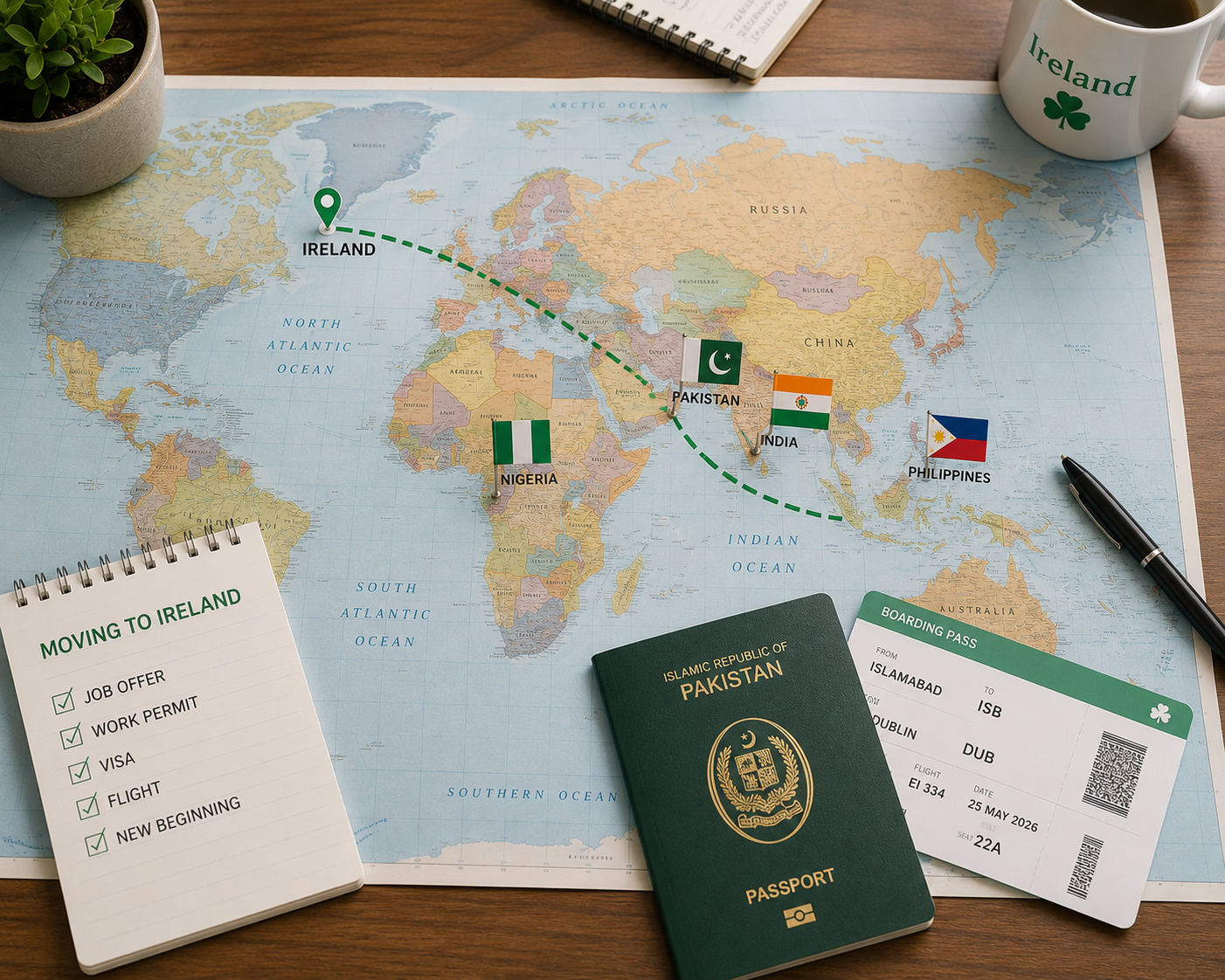
You need a D Employment visa if you are a visa-required national coming to work in Ireland. Ireland maintains its own visa-required list (it is not in the Schengen system, so Schengen visas are irrelevant here).
Major visa-required countries for Irish entry include:
- South Asia: Pakistan, India, Bangladesh, Sri Lanka, Nepal
- Asia: China, Vietnam, the Philippines, Indonesia
- Africa: Nigeria, Ghana, Egypt, Kenya, Zimbabwe, and many others
- Middle East: Iran, Iraq, Syria, Lebanon
- Others: Russia and many more – always check the current list
If your country is on the visa-required list, the sequence is fixed:
Employment permit approved → D visa application → visa issued → travel → register for IRP.
You cannot legally skip the visa stage, and airlines will refuse boarding without it.
Who Does Not Need One?
Three groups skip the visa stage entirely:
1. EEA, Swiss, and UK citizens. They need no visa and no employment permit. UK citizens work freely under the Common Travel Area.
2. Non-visa-required nationals. Citizens of the USA, Canada, Australia, New Zealand, Japan, South Korea, Brazil, Mexico, Malaysia, the UAE, and other non-visa-required countries do not need an entry visa. They still need the employment permit – they simply fly to Ireland with the permit and get landing permission at the border. Americans should read our dedicated guide to Jobs in Ireland for Americans.
3. People already legally resident in Ireland. If you already hold an Irish Residence Permit with a valid stamp and obtain a new employment permit, you update your permission in-country – no new entry visa needed.
Note: Not sure which group you are in? ISD publishes the up-to-date list of visa-required countries on irishimmigration.ie. Check it before doing anything else – it determines your entire application path and timeline.
Who needs a work visa for Ireland? Citizens of visa-required countries – including Pakistan, India, China, Nigeria, and the Philippines – need a Long Stay D Employment Visa in addition to an employment permit. Citizens of the EEA, UK, and Switzerland need neither. Americans, Canadians, and Australians need only the employment permit, not the visa.
Work Visa vs Employment Permit vs Irish Residence Permit
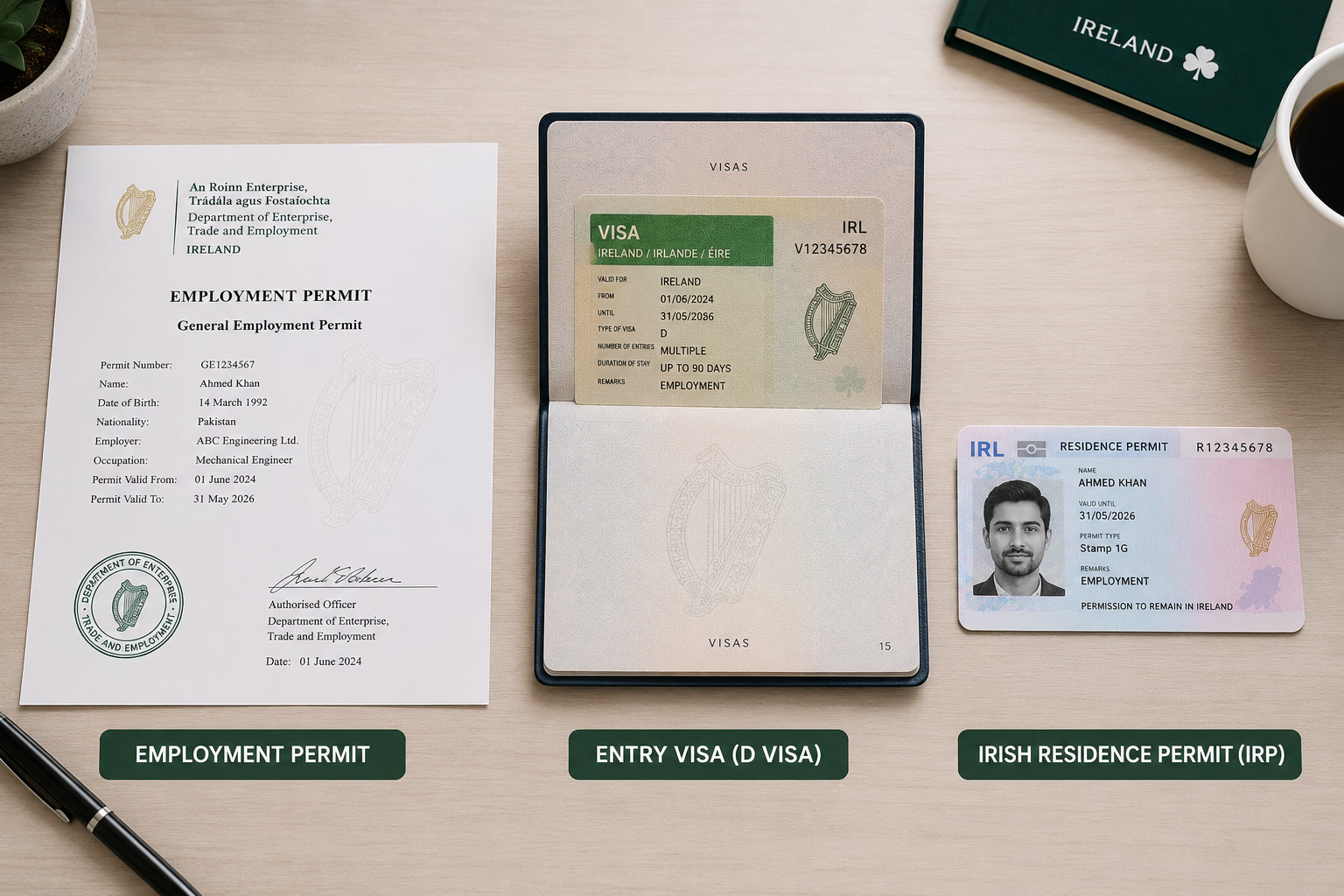
These three documents confuse almost every first-time applicant. Here is the clean separation.
Comparison Table
| Feature | Employment Permit | Work Visa (D Visa) | Irish Residence Permit (IRP) |
|---|---|---|---|
| What it is | Permission to work | Permission to travel and enter | Proof of registered residence |
| Issued by | DETE | ISD (visa office/embassy) | ISD registration office / Gardaí |
| When you get it | First | Second (visa-required only) | Third – after arrival |
| Where you apply | EPOS online | AVATS online + documents | In person in Ireland |
| Cost | €500–€1,000 (new) | €60–€100 | €300 per registration |
| Physical form | Paper permit (original + copy) | Sticker in passport | Biometric card |
| Validity | Up to 2 years (first permit) | Usually matched to travel/permit | Usually 1–2 years, renewable |
The employment permit answers “can you work here?“. The visa answers “can you travel here?“. The IRP answers “are you legally living here?“.
You need all three (or the first and third, if you are non-visa-required). Miss one and the system does not work. For the permit stage itself, our detailed guides on the General Employment Permit Ireland and the Critical Skills Employment Permit Ireland cover eligibility, salary thresholds, and how employers apply.
Eligibility Requirements
To qualify for an Ireland employment visa in 2026, you must satisfy ISD on every point below.
Eligibility Table
| Requirement | What ISD expects |
|---|---|
| Employment permit | Approved by DETE before you apply for the visa |
| Genuine job offer | Contract with the employer named on your permit |
| Passport | Valid at least 6 months after your planned arrival |
| Intentions | You will work in the permitted job and obey visa conditions |
| Finances | You can support yourself until your first salary |
| Character | No serious criminal record; police certificates where requested |
| Immigration history | No unexplained overstays or previous fraud, in Ireland or elsewhere |
| Health insurance | Private medical cover for the initial period |
| Full disclosure | Every question answered truthfully; no false documents |
Two points deserve emphasis.
Honesty is a hard requirement. A single false document – a fake bank statement, an inflated experience letter – leads to refusal and can trigger a 5-year ban from applying for Irish visas. Visa officers cross-check documents with employers and banks.
Previous refusals are not fatal. A refused UK, Schengen, US, or Irish visa must be declared, but a well-explained history usually causes no problem. Concealing a refusal, on the other hand, is treated as deception.
Required Documents (The Complete 2026 Checklist)
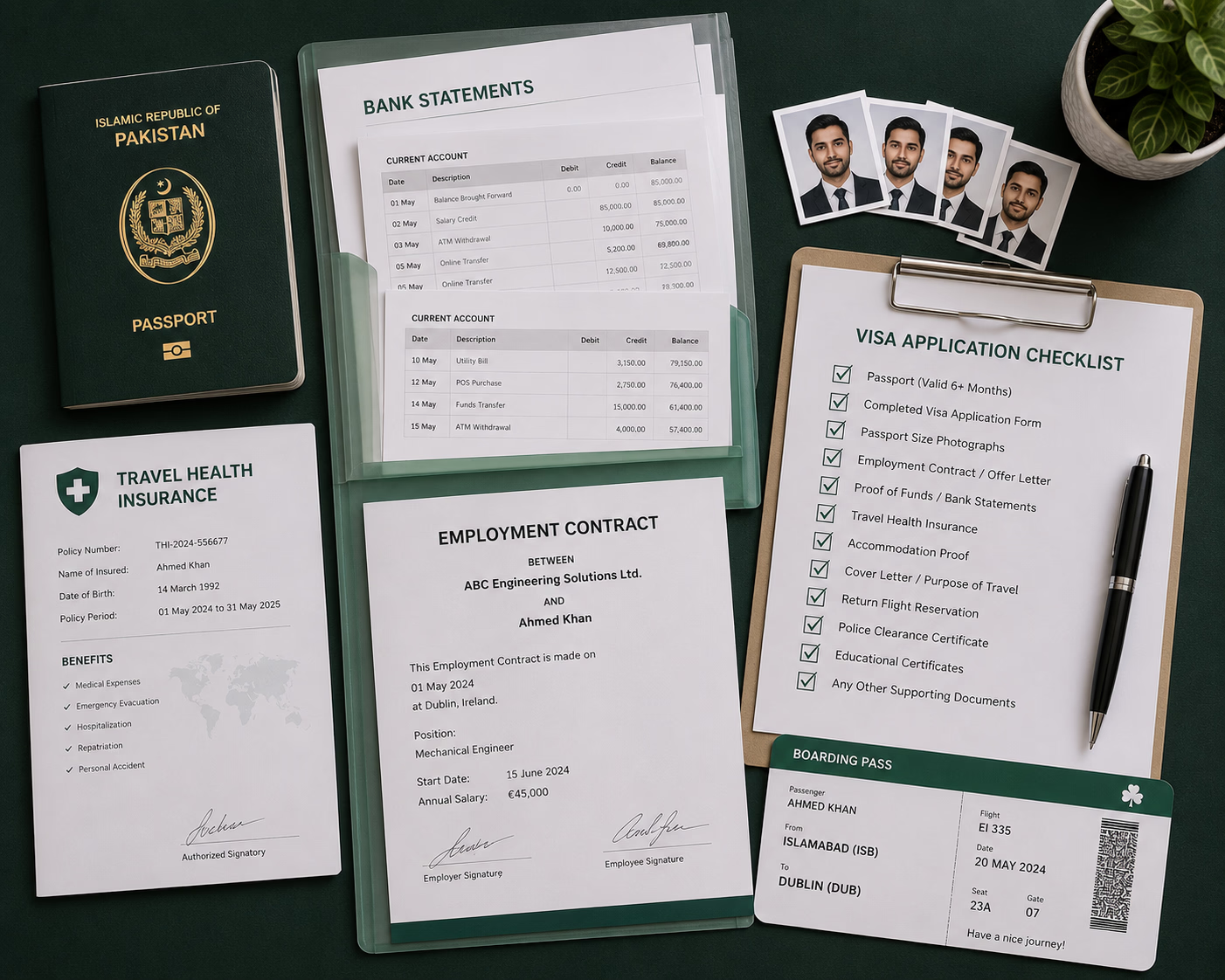
This section is the heart of your application. ISD publishes an official checklist for the Long Stay Employment visa, and your file should follow its order exactly. Here is everything, explained.
Documents Checklist Table
| # | Document | Key details |
|---|---|---|
| 1 | AVATS summary sheets | Printed, signed, and dated after online submission |
| 2 | Passport | Current + previous passports; 6+ months validity; blank pages |
| 3 | Passport photos | 2 colour photos meeting Irish specs, taken within 6 months |
| 4 | Employment permit | Copy of the original DETE permit |
| 5 | Job offer / contract | Signed contract matching the permit’s job, salary, employer |
| 6 | Employer letter | On headed paper: role, salary, start date, duration |
| 7 | CV / résumé | Up to date, consistent with your application |
| 8 | Qualifications | Certificates and transcripts relevant to the job |
| 9 | Work experience letters | From previous employers, verifiable contact details |
| 10 | Bank statements | Usually 6 months, showing genuine activity and balance |
| 11 | Police clearance | Where requested – from countries you lived in |
| 12 | Medical/travel insurance | Covering you from arrival until eligible for other cover |
| 13 | Accommodation evidence | Where you will stay initially (booking, employer letter, host) |
| 14 | Application letter | Your signed cover letter explaining the purpose of travel |
| 15 | Visa fee receipt | Proof of payment |
| 16 | Translations | Certified translations of any non-English documents |
Let’s unpack the requirements that generate the most questions.
Passport Requirements
Your passport must be valid for at least 6 months after your date of arrival in Ireland. In practice, renew it if it has under a year left – your IRP registration will be limited by passport validity. Include previous passports if they show travel history; old visas and stamps support your credibility. At least two blank pages are needed for the visa sticker and entry stamps.
Employment Permit Requirement
You apply for the visa only after DETE approves your employment permit. Submit a clear copy of the permit with your visa file (keep the original safe – you carry it when travelling). The details on your visa application must match the permit exactly: same employer name, same job title, same salary. Discrepancies are a leading cause of delay.
Job Offer Requirement
Alongside the permit, include your signed employment contract and a letter from your employer on company letterhead confirming the position, annual salary, start date, and contract duration. The letter should include the company’s registration details and a contact person the visa office can verify.
Financial Documents

You must show you can support yourself from landing until your first payslip. There is no single published magic number for employment visas, but successful applications typically show:
- 6 months of bank statements in your name, with regular, explainable activity
- A closing balance that comfortably covers flights, first weeks’ accommodation, and living costs (think in terms of €1,500–€3,000+ available, more with family)
- Explanations for any large recent deposits – sudden unexplained lump sums look like borrowed “show money” and damage credibility
Statements must be on bank letterhead or stamped, showing your name, account number, and dates.
Police Certificate
Not every applicant is asked, but many visa offices request police clearance certificates from your country of residence (and sometimes from countries where you lived for a year or more). Get yours early – in some countries they take weeks. Certificates should generally be less than 6 months old when submitted.
Medical Insurance
You need private medical or travel insurance covering you from arrival until you qualify for employer or Irish cover. Policies should cover hospitalisation and medical emergencies in Ireland. A standard travel-insurance policy covering the first weeks, plus evidence of employer health cover starting with the job, satisfies most offices.
Photographs
Two identical colour passport-style photographs, taken within the last 6 months, against a plain light background, without glasses glare or head coverings (except for religious reasons, with the full face visible). Write your name and AVATS reference on the back of each.
Proof of Accommodation
Show where you will live on arrival. Any of these works:
- A booking for your first weeks (hotel, hostel, short-term rental)
- A letter from your employer confirming arranged accommodation
- A letter from a host (friend/family) with their proof of address and immigration status
You do not need a 12-month lease before you arrive – ISD knows nobody rents an Irish apartment from abroad. You need a credible landing plan.
Note: Follow the ISD checklist order exactly, use single-sided copies, and never staple originals. Poorly organised files are slower to assess. And never, ever include a document you cannot stand behind – verification checks are real.
Step-by-Step Application Process
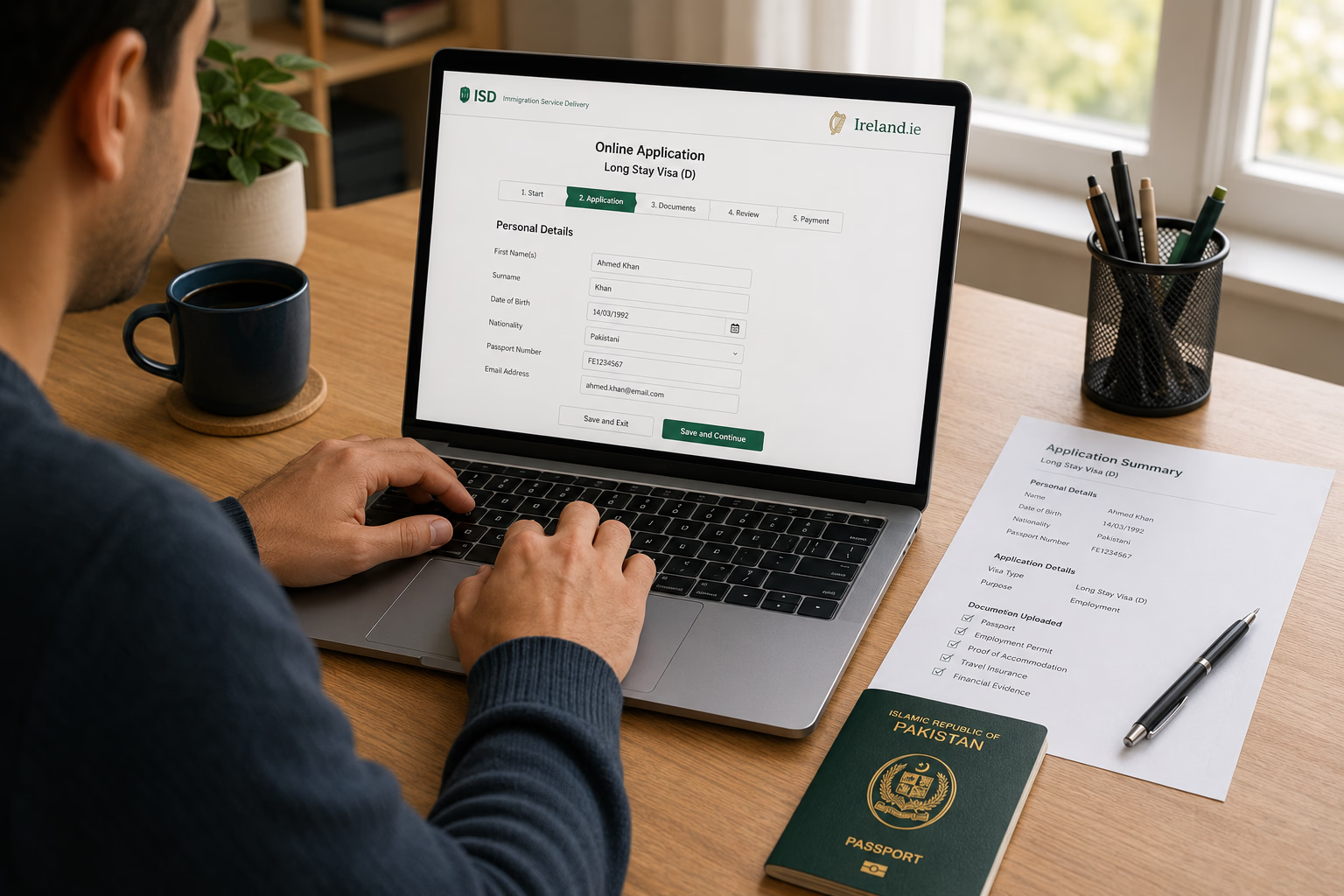
Here is the full journey from permit approval to visa in passport.
Step 1 – Confirm your employment permit is approved. The visa application asks for your permit details. Applying before approval wastes your fee.
Step 2 – Complete the online AVATS form. Go to the Irish visa application system (AVATS) via irishimmigration.ie. Select “Long Stay (D)” and purpose “Employment”. You can apply up to 3 months before your travel date. Answer every question truthfully – the form covers identity, family, employment, travel history, and previous refusals.
Step 3 – Print and sign the summary sheets. AVATS generates summary application sheets with your transaction number. Print, sign, and date them. The sheets tell you exactly where to send your documents – this varies by country.
Step 4 – Pay the visa fee. €60 for single entry, €100 for multi entry. Payment methods depend on your local visa office or application centre (card, bank draft, or at the counter). Some nationalities are fee-exempt under bilateral agreements – the AVATS process tells you if this applies.
Step 5 – Submit your documents and biometrics. Depending on your country, you will submit your passport and file to an Irish embassy/consulate or through a commercial partner such as VFS Global. Many nationalities – including applicants in Pakistan, India, Nigeria, and China – must also provide fingerprint biometrics at the application centre. Book the appointment promptly; slots fill in peak season.
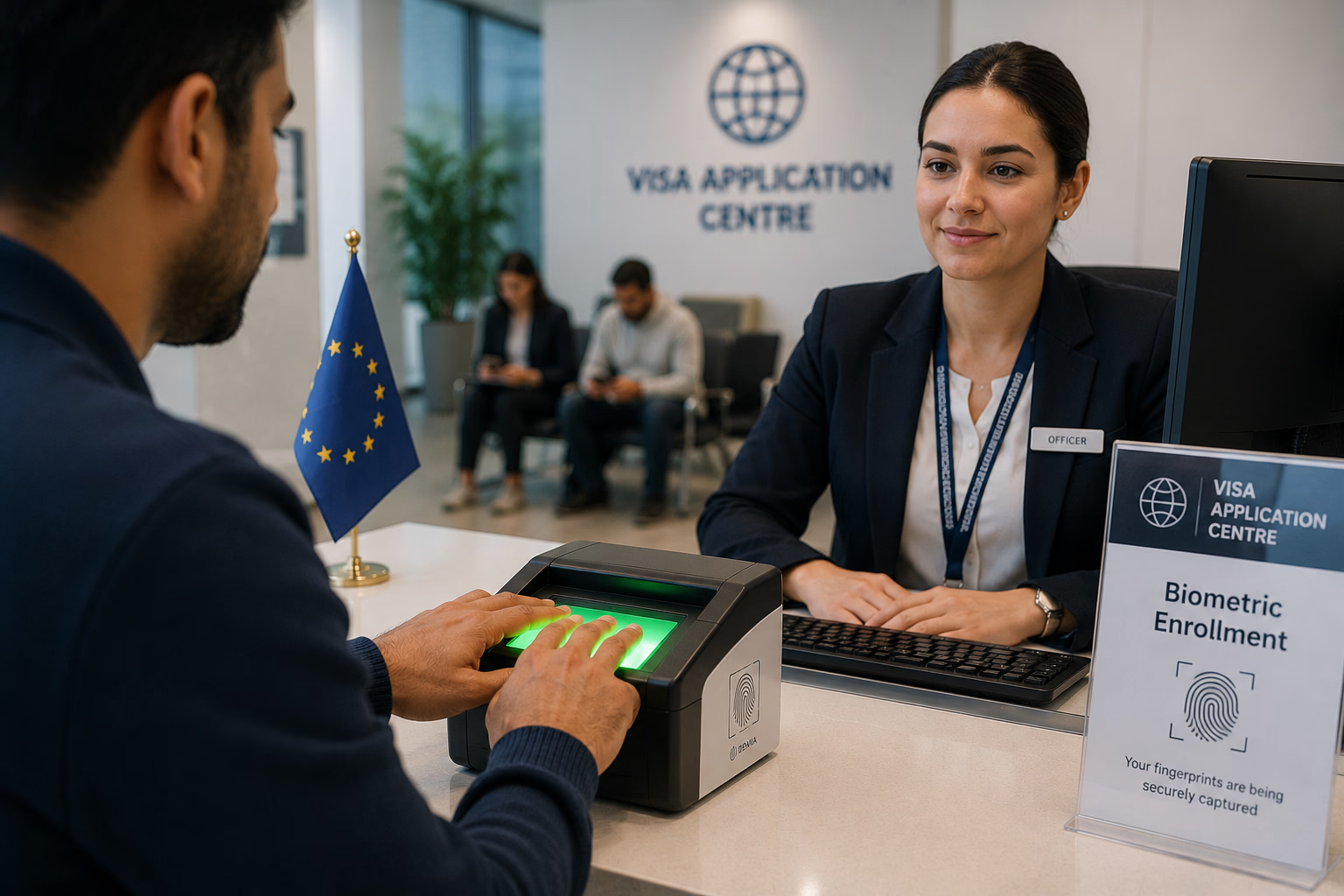
Step 6 – Wait for processing. Your file travels to the deciding visa office (some countries are decided locally, others in Dublin or a regional hub such as Abu Dhabi or New Delhi). ISD publishes weekly updates showing the application dates currently being decided. Do not book non-refundable flights yet.
Step 7 – Respond to any requests quickly. The visa office may ask for extra documents or clarification, with a deadline. Missing a deadline usually means refusal on the papers available.
Step 8 – Decision. If approved, your passport comes back with the D visa sticker. Check every detail on it immediately – name spelling, passport number, validity dates. Errors must be fixed before travel.
Is there a visa interview?
Usually no. Irish employment visa decisions are made on papers and biometrics; there is no routine interview like a US visa. A visa office can request an interview in unusual cases, and officers may phone your employer to verify the job. Treat every document as if it will be checked – because it may be.
Visa Fees (2026)
Fees Table
| Item | Cost |
|---|---|
| Long Stay D visa – single entry | €60 |
| Long Stay D visa – multi entry | €100 |
| Transit visa (if you connect via certain countries) | €25 |
| VFS / application centre service charge | Varies by country (typically €25–€60 equivalent) |
| Biometrics fee (where charged) | Included in or added to centre fees |
| Irish Residence Permit registration (after arrival) | €300 |
| Employment permit (context – paid earlier) | €500–€1,000 |
Notes on fees:
- Visa fees are non-refundable, even if refused
- Citizens of certain countries pay no visa fee under agreements (AVATS confirms this)
- Budget for courier return of your passport where offered
- Nobody official will ever ask you to pay extra to “speed up” a decision – such requests are scams
How much does an Ireland work visa cost in 2026? The Long Stay D Employment Visa costs €60 for single entry or €100 for multiple entry, plus local application centre charges. After arrival, registering for the Irish Residence Permit costs €300. The employment permit itself, obtained earlier, costs €500–€1,000.
Processing Time
Visa processing is the least predictable part of the journey. Times vary by visa office, season, and your file’s completeness.
Processing Times Table (typical 2026 ranges)
| Stage | Typical time |
|---|---|
| D Employment visa – straightforward file | 4–8 weeks |
| D Employment visa – busy offices / peak season | 8–12+ weeks |
| Additional document requests | Adds 2–4 weeks |
| Biometrics appointment wait (busy centres) | A few days to 2 weeks |
| Passport return after decision | A few days to 2 weeks |
How to keep your case at the fast end:
- Submit a complete file in checklist order the first time
- Apply as early as allowed – the full 3 months before travel
- Respond to any ISD request within days, not weeks
- Check ISD’s weekly visa decision updates to track which application dates your office is deciding
Note: Do not resign from your current job, sell property, or book non-refundable travel based on an expected decision date. Wait for the visa in your passport. Every year applicants get burned by treating estimates as promises.
The Visa Decision
If approved: the visa sticker shows your name, the visa type (D), number of entries, and validity window. You must enter Ireland within that window. The visa is typically aligned with your intended travel, not the full length of your permit – your long-term status comes from registration, not the sticker.
If refused: you receive a refusal letter listing the reasons by reference code. Common codes relate to finances (F), documents (ID/D), obligations to return not shown, or inconsistencies (INCO). Refusal is not the end – see the appeals section below.
Travelling to Ireland
Once the visa is in your passport:
- Book flights arriving within your visa validity
- Carry these in your hand luggage, never checked baggage: passport with visa, original employment permit, employment contract and employer letter, proof of accommodation for your first weeks, insurance documents, and some accessible funds (card + modest cash)
- If transiting through the UK or Schengen countries, check whether you need a transit visa for that country separately
What Happens at Immigration?

At Dublin Airport (or another port of entry), you queue for the non-EEA desk and present your passport to an officer of the Border Management Unit.
The officer will typically:
- Check your visa and passport
- Ask the purpose of your trip – answer simply: “I am coming to work; here is my employment permit”
- Review your permit and possibly your contract
- Stamp your passport with landing permission, usually short (for example 90 days), with a written or verbal instruction to register
That short stamp worries people unnecessarily. It is normal. It is your window to register for the Irish Residence Permit, which then carries your real, longer permission.
Answer questions calmly and consistently with your documents. Officers refuse entry very rarely when paperwork is genuine and in order.
Registering in Ireland After Arrival
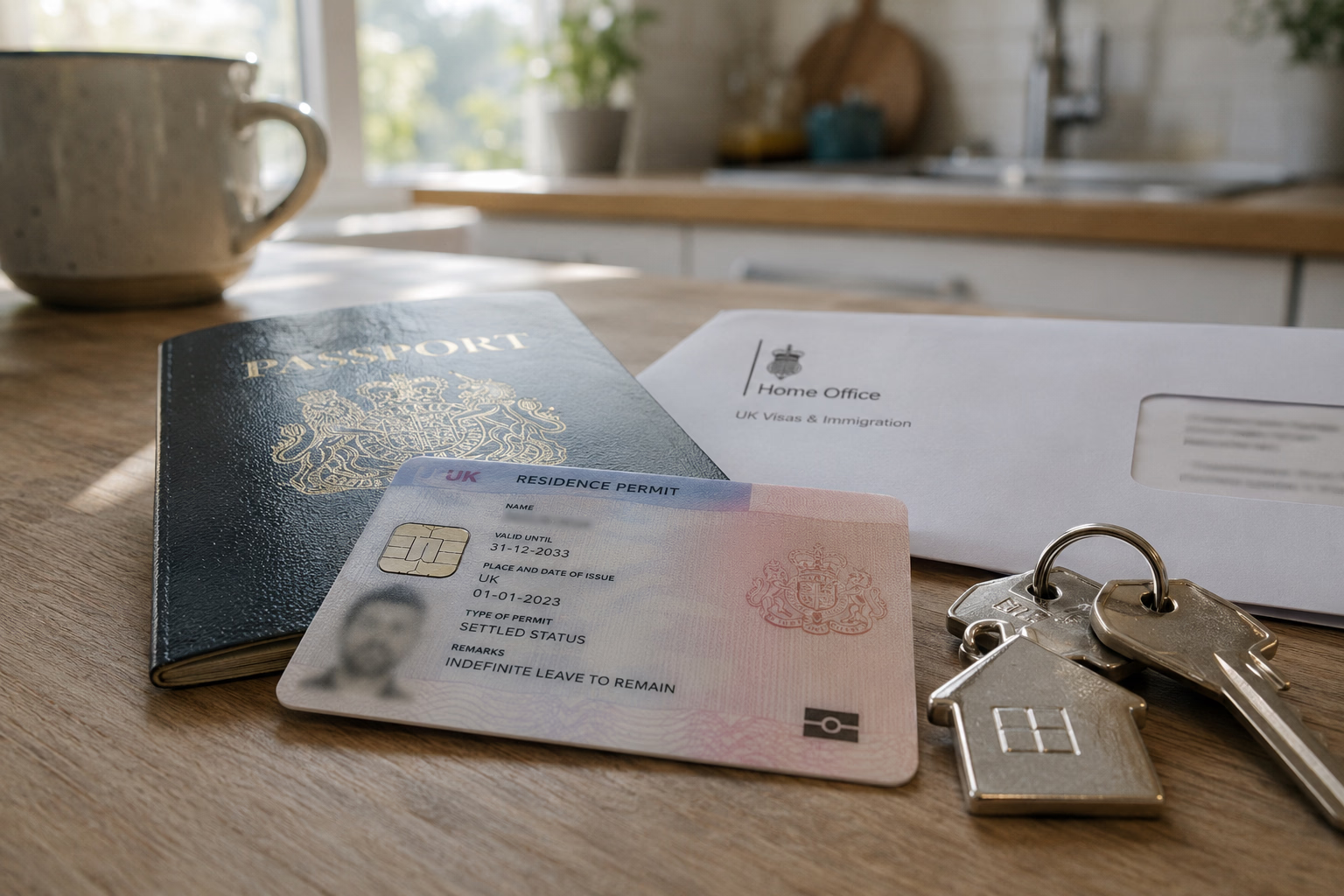
Getting an Irish Residence Permit
Registration converts your entry permission into residence.
- Dublin area: book an appointment online with the ISD Registration Office (Burgh Quay). Demand for appointments is high – start checking immediately after arrival.
- Outside Dublin: register at your regional Garda immigration office.
Bring your passport, employment permit, proof of address, and pay the €300 fee by card. You will be fingerprinted and photographed. You receive Stamp 1 – permission to reside and work in line with your employment permit – and your biometric IRP card is then sent to you by post.
Register before your landing stamp expires. Late registration means being unlawfully present – a stain on every future application.
PPS Number
The Personal Public Service number is your tax and public services ID.
- Apply online at MyWelfare.ie with your passport, proof of address, and job contract
- Allow 1–3 weeks
- Without it you will be emergency-taxed at punishing rates, so do this in week one
Opening a Bank Account
Irish banks (AIB, Bank of Ireland, PTSB) and digital banks (Revolut with an Irish IBAN, N26) require:
- Passport (and ideally your IRP once received)
- Proof of Irish address (a letter from your employer or landlord works at most banks)
Get the account opened early – your employer needs an IBAN to pay you.
Tax Registration
With your PPS number:
- Create a myAccount at revenue.ie
- Register your job (your employer’s tax registration number is on your contract or payslip)
- Revenue sends your employer a payroll notification, your correct tax credits apply, and any emergency tax already deducted is refunded through payroll
You will pay PAYE income tax, USC, and PRSI like every Irish worker. On typical permit salaries, expect net take-home of roughly 75–80% of gross.
Bringing Your Family
Family rights depend on your permit type, not the visa:
- Critical Skills Employment Permit holders: family can apply to join you immediately
- General Employment Permit holders: family can normally join after you have worked in Ireland for 12 months, subject to an income test tied to Working Family Payment thresholds
Visa-required spouses and children apply for their own Long Stay D (Join Family) visas. These are document-heavy applications – marriage and birth certificates, relationship evidence, your payslips and IRP – and processing can take many months. Plan for a period of separation if you hold a General permit.
Can Your Spouse Work?
- Spouse/partner of a Critical Skills holder: receives Stamp 1G on arrival and can work for any employer without a permit
- Spouse/partner of a General Employment Permit holder: since May 2024, an eligible spouse or partner who joins under family reunification is registered on Stamp 1G and can work without a separate permit, though self-employment is not allowed (ISD notice)
The bigger difference between the two permits is timing: Critical Skills families can join immediately, while General Employment Permit holders normally wait 12 months. Compare them fully in our Critical Skills Employment Permit Ireland and General Employment Permit Ireland guides, or see how to bring your family to Ireland on a work permit for income thresholds and how family members apply.
Common Mistakes That Sink Applications
- Applying for the visa before the permit is approved – instant waste of time and fee
- Mismatched details – salary or job title differing between contract, permit, and visa form
- Unexplained lump-sum deposits in bank statements just before applying
- Concealing previous visa refusals (Ireland shares data with the UK and others)
- Photocopies of statements without bank stamps or e-statements without verification
- Missing translations for non-English documents
- Ignoring a request for further information until after the deadline
- Booking non-refundable flights before the decision
- Letting the passport expire into the 6-month danger zone mid-process
- Using an agent who “guarantees” visas – nobody can, and fake documents from agents destroy your record
Reasons for Visa Refusal

The most frequent refusal grounds for Irish employment visas:
- Insufficient or unconvincing finances – low balances, unexplained deposits, borrowed funds
- Incomplete documentation – missing items from the checklist
- Inconsistencies – dates, salaries, or histories that do not line up across documents
- Doubts about the job’s genuineness – employer could not be verified or did not respond
- Immigration history – previous overstays, refusals with unresolved concerns, deception
- False or misleading documents – leads to refusal and potential 5-year ban
- Passport problems – validity too short, damage, or identity questions
Every refusal letter states its reasons. Read them precisely – they are your map for the appeal or reapplication.
How to Appeal
Good news: Irish visa appeals are free.
- Submit a written appeal to the Visa Appeals Officer at the address in your refusal letter
- Deadline: within 2 months of the refusal date
- Address every stated reason point by point, attaching new or clarified evidence
- A different, more senior officer reviews the case
- Appeals commonly take several weeks to a few months
When to appeal vs reapply: if the refusal was a misunderstanding or you can now evidence the missing point, appeal. If your circumstances have genuinely changed (new job, stronger finances), a fresh application is often cleaner. There is no limit on reapplying, but repeat applications with the same weaknesses get the same result.
Application Timeline (Realistic, End to End)
| Phase | Typical week |
|---|---|
| Job offer signed | Week 0 |
| Employment permit process (LMNT + DETE) | Weeks 1–14 |
| Permit approved | ~Week 14 |
| AVATS visa application + biometrics | Weeks 14–15 |
| Visa processing | Weeks 15–23 |
| Visa issued, travel booked | Week 23–24 |
| Arrival in Ireland | Week 24–25 |
| IRP registration, PPS, bank, Revenue | Weeks 25–29 |
| Fully settled and correctly taxed | ~Month 7 |
Non-visa-required nationals cut roughly 6–8 weeks from the middle of this timeline. See our step-by-step guide on How to Get a Job in Ireland for the job-search phase that comes before all of this, and browse our guide to jobs in demand in Ireland for the sectors where employers sponsor.
Pros & Cons of the Ireland Work Visa Route
Pros:
- Clear, rules-based system with published checklists and fees
- Low visa fee (€60) compared with many countries
- Free appeals process with a real success rate for well-argued cases
- No routine interview stage
- Leads directly to residence (Stamp 1), then Stamp 4 and citizenship eligibility
- English-speaking, EU-member destination with strong worker protections
Cons:
- Two-authority process (DETE + ISD) doubles the paperwork
- Processing times fluctuate and are hard to plan around
- Visa-required families face long join-family waits
- Registration appointments in Dublin can be scarce
- Costs stack up: permit + visa + insurance + IRP + flights
- No premium/priority processing option for employment visas
Frequently Asked Questions
1. What are the main Ireland work visa requirements in 2026?
You need an approved employment permit from DETE, a passport valid at least 6 months beyond arrival, a completed AVATS online application, two recent photographs, your signed job contract and employer letter, around 6 months of bank statements, medical insurance, accommodation evidence, and – where requested – police clearance certificates. Visa-required nationals must also give biometrics. The visa fee is €60 for single entry or €100 for multiple entries.
2. What is the difference between an Ireland work visa and a work permit?
The employment permit, issued by DETE, is your legal permission to work for a named employer. The work visa (Long Stay D visa), issued by Immigration Service Delivery, is your permission to travel to and enter Ireland. Visa-required nationals need both, in that order. Non-visa-required nationals such as Americans need only the permit. Neither replaces registration for the Irish Residence Permit after arrival.
3. Can I apply for the visa before my employment permit is approved?
No. The Long Stay D Employment visa application requires details of your approved permit, and applying early leads to refusal or rejection of the file. The correct order is fixed: permit first through EPOS, then visa through AVATS. You can, however, prepare your visa documents – bank statements, police certificates, insurance quotes – while the permit is still processing to save weeks later.
4. How long does the Ireland work visa take to process in 2026?
Most complete employment visa applications are decided within 4–8 weeks, though busy offices and peak seasons can stretch this to 12 weeks or more. Requests for additional documents add further time. ISD publishes weekly updates showing which application dates each office is currently deciding, so you can track progress. Apply as early as allowed – up to 3 months before your travel date.
5. How much money do I need to show for an Ireland work visa?
There is no single published figure for employment visas. Officers want evidence you can support yourself until your first salary: genuine bank statements covering about 6 months, a balance that comfortably covers travel and initial living costs (commonly €1,500–€3,000 or more, higher with dependants), and explanations for any large recent deposits. Borrowed “show money” parked in an account shortly before applying is a classic refusal trigger.
6. Do I need an interview for an Irish work visa?
Routine interviews are not part of the Irish employment visa process. Decisions are made on your documents and biometrics. Visa offices occasionally phone employers to verify job offers and can request an interview in exceptional cases, but the vast majority of applicants never speak to an officer. This makes document quality and consistency even more important – your file speaks for you.
7. Is IELTS or an English test required for an Ireland work visa?
No. Neither DETE nor ISD requires an English language test for employment permits or D Employment visas. Employers assess English at interview, and certain regulated professions (nursing, teaching) require English scores for professional registration, but there is no visa-stage IELTS requirement. This is a significant difference from countries like the UK, Australia, and Canada.
8. Do I need biometrics for an Ireland visa?
Many visa-required nationalities must provide fingerprint biometrics when submitting their application – including applicants in Pakistan, India, Nigeria, and China. Biometrics are captured at the designated application centre (often VFS Global). Your AVATS summary sheets and the local visa office instructions confirm whether biometrics apply to you and where to book the appointment.
9. Can I travel to Ireland while my visa is being processed?
No. Your passport is usually held with the application, and you have no permission to enter for work without the visa. Entering visa-free jurisdictions to “wait nearby” does not help and can complicate your history. Wait for the decision, check the visa sticker for errors, and only then book travel within the visa’s validity window.
10. What is AVATS?
AVATS is the Irish online visa application system. Every visa application starts there: you complete the form, receive a transaction number, and print summary sheets that tell you where to send your passport and documents. AVATS itself does not decide anything – it is the intake system. Decisions are made by ISD visa offices in Dublin or at regional hubs and embassies.
11. How long is the Ireland work visa valid?
The D visa sticker typically covers your intended travel window rather than your full employment period – it gets you into the country. Your long-term right to stay comes from registering after arrival and receiving your Irish Residence Permit with Stamp 1, which is usually issued in line with your employment permit’s duration and then renewed.
12. What is Stamp 1?
Stamp 1 is the immigration permission given to employment permit holders at registration. It allows you to live in Ireland and work for the employer named on your permit. It does not allow self-employment or second jobs. General Employment Permit holders can apply for Stamp 4 after 57 months, which removes those restrictions entirely; Critical Skills permit holders qualify after 21 months.
13. Do Americans need a visa to work in Ireland?
No entry visa – the United States is a non-visa-required country. Americans still need an employment permit from DETE before starting work, and they must register for an Irish Residence Permit after arrival like everyone else. They simply skip the AVATS/D-visa stage and present their permit at the border. Our Jobs in Ireland for Americans guide covers the full path.
14. Can Pakistani citizens get an Ireland work visa?
Yes. Pakistan is visa-required, so the sequence is: job offer, employment permit via EPOS, then Long Stay D Employment visa via AVATS with biometrics at the designated centre. Attested education and experience documents, clean six-month bank statements, and a polio vaccination certificate for travel are standard. Processing commonly takes eight weeks or longer, so apply immediately after permit approval. See our guide to Jobs in Ireland for Pakistanis for sector-by-sector detail.
15. Can Indian citizens get an Ireland work visa?
Yes. Indian nationals received more Irish employment permits than any other nationality in 2025: 9,947 of 31,044, according to DETE statistics. After the permit is approved, apply through AVATS and submit documents and biometrics via VFS Global centres in major Indian cities. Typical processing runs four to eight weeks. Healthcare, IT (usually Critical Skills), hospitality, and logistics are the biggest sectors for Indian applicants. See our guide to Jobs in Ireland for Indians for sector-by-sector detail.
16. What is a Long Stay D visa?
It is Ireland’s visa category for stays longer than 90 days – covering employment, study, and joining family. The employment variant requires an approved work permit. A D visa differs from the short-stay C visa, which caps visits at 90 days and prohibits work. Holding a D visa also leads to registration and an Irish Residence Permit after arrival, which a C visa never does.
17. Does Ireland accept Schengen visas?
No. Ireland is in the EU but not in the Schengen area, so Schengen visas are not valid for entering Ireland, and Irish visas are not valid for Schengen countries. If your journey transits a Schengen airport or the UK, check separately whether you need a transit visa for that country. Plan connections with this in mind.
18. Can I bring my family on an Ireland work visa?
Family rights follow your permit type. Critical Skills permit holders can bring spouses and children immediately. General Employment Permit holders wait 12 months and must meet an income threshold. Visa-required family members apply for Long Stay D Join Family visas, which involve heavy documentation and can take many months to process. Family members register for their own IRPs after arrival.
19. Can my spouse work in Ireland?
Spouses of Critical Skills permit holders receive Stamp 1G and can work for any employer immediately, no permit needed. Since May 2024, eligible spouses and partners of General Employment Permit holders who join under family reunification are also registered on Stamp 1G and can work without a separate permit. The main difference is timing: General Employment Permit holders normally wait 12 months before family can join.
20. What happens at Irish immigration when I arrive?
A Border Management Unit officer checks your passport, visa, and employment permit, may ask brief questions about your job, and stamps you in with short landing permission – often around 90 days. That stamp is your window to register for the Irish Residence Permit. Keep your permit, contract, and accommodation details in hand luggage for this conversation.
21. What is the Irish Residence Permit and how do I get it?
The IRP is the biometric card proving your legal residence. After arrival, and before your landing permission ends, book a registration appointment – online for Dublin’s Burgh Quay office, or at your regional Garda immigration office elsewhere. Bring your passport, employment permit, and proof of address, pay €300 by card, and give fingerprints. Your Stamp 1 is granted and the card is then sent to you by post.
22. How do I get a PPS number?
Apply online at MyWelfare.ie after arrival with your passport, proof of Irish address, and evidence of why you need it – your employment contract suffices. Processing takes roughly one to three weeks. The PPS number unlocks correct taxation, public services, and eventually your Revenue myAccount. Apply in your first week; until Revenue links your job, emergency tax will shrink your payslips.
23. Will I pay emergency tax when I start work?
Almost certainly for your first pay cycle or two, and it is painful – flat higher-rate deductions. It ends once you have a PPS number and register your job in Revenue’s myAccount, prompting a payroll notification to your employer. Everything over-deducted is automatically refunded through your next payslips. Speed matters: PPS application in week one, Revenue registration the day the number arrives.
24. Can I change jobs after arriving on a work visa?
Your visa got you into the country; your permit governs your work. Since September 2024, employment permit holders can change to a new employer in the same occupation type after nine months without a fresh permit application or Labour Market Needs Test. A genuinely different role requires a new permit. Your IRP and Stamp 1 continue as long as valid permission underpins them.
25. What if my Ireland visa is refused?
Read the refusal letter’s stated reasons carefully. You can appeal in writing, free of charge, within two months to the Visa Appeals Officer, addressing each reason with evidence. A senior officer reviews the file afresh. Alternatively, submit a new application fixing the weaknesses. Refusals must be declared in future applications everywhere, so resolving the underlying issue matters more than speed.
26. Can a visa refusal ban me from Ireland?
An ordinary refusal does not ban you – you may appeal or reapply immediately. However, refusals involving false or misleading documents can carry a five-year ban on further Irish visa applications. This is why buying documents from agents is catastrophic: even a genuine job cannot save an application built on one fake bank statement.
27. Do I need health insurance for an Ireland work visa?
Yes – evidence of private medical or travel insurance covering you from arrival is a standard checklist item. Cover should include hospitalisation and emergencies. Once working, many employees move onto employer schemes or Irish private insurers, and PRSI contributions build public entitlements. For the visa file, a policy bridging your first weeks plus proof of subsequent cover is sufficient.
28. Can I study on an Ireland work visa?
Your permission is for employment. Short courses or part-time study alongside your job are generally unproblematic, but full-time study is a different immigration permission (Stamp 2) with its own conditions. If your plans shift from working to studying, you must change your permission through ISD rather than simply enrolling. Employer-sponsored training connected to your job – like a QQI Level 5 for care workers – is fine.
29. Does time on a work visa count towards Irish citizenship?
Time on the visa itself is not the measure – what counts is reckonable residence while registered, which your Stamp 1 provides. Five years of reckonable residence (within the last nine, including one continuous final year) makes you eligible to apply for naturalisation. Employment permit years count fully. Student Stamp 2 years do not, which is why switching from study to work permission matters for long-term plans.
30. Is it hard to get an Ireland work visa?
Not if the foundations are genuine. The visa stage refusal risk is low for applicants with an approved permit, honest documents, consistent details, and credible finances. The genuinely hard part happens earlier – securing a qualifying job offer and the employment permit. Treat the visa file with the same seriousness as the permit, follow the ISD checklist exactly, and your odds are strong.
Conclusion
The Ireland work visa is the final, most mechanical step in a journey that starts with a job offer and ends with an IRP card in your wallet.
The system rewards preparation. An approved permit, a checklist-perfect document file, honest bank statements, and early application cover 95% of what visa officers assess. The remaining 5% is consistency – making sure every document tells the same story about the same job, salary, and person.
Keep the three-layer model in mind: permit (right to work), visa (right to travel), registration (right to reside). Handle them in order, respect each authority’s rules, and Ireland’s process is one of the more transparent and affordable routes into the EU workforce.
Your next steps depend on where you are in the journey. No job yet? Start with How to Get a Job in Ireland and our roundup of jobs in demand in Ireland. Job offer in hand? Move to the General Employment Permit Ireland or Critical Skills Employment Permit Ireland guide. Permit approved? Re-read the documents checklist above and file your AVATS application today.
Official Resources
- Immigration Service Delivery (ISD) – visa rules, AVATS, decisions, registration
- AVATS online application – the official visa application portal
- Department of Enterprise, Tourism and Employment (DETE) – employment permits
- Citizens Information – plain-English guidance on visas, permits, and rights
- Revenue Commissioners – tax registration and myAccount
- MyWelfare – PPS number applications
- Ireland.ie – Visas for Ireland – visa fees and application guidance
- ISD – Long stay employment visa – eligibility, timing, appeals
- DETE – Employment permit statistics 2025
Visa fees, application timing, appeals, registration, Stamp 4 and spouse rules checked 13 October 2026 against ISD, Ireland.ie and DETE. Other information last verified July 2026; always confirm on irishimmigration.ie before applying.